Reading Controls
Customize your reading experience
Switch between light and dark themes
Adjust text size and spacing for comfort
Getting Hired at an Indian Startup: Mastering Outreach & The First Call
Getting Hired at an Indian Startup: Mastering Outreach & The First Call
You've found the perfect startup. You've spent hours crafting a brilliant Product Strategy Memo. You're ready to reach out.
And then you freeze.
What if they don't respond? What if I'm bothering them? What if my email sounds stupid? Should I wait for them to post a job instead?
Meanwhile, someone else with a worse memo and less relevant experience sends their email without overthinking it. They get a response. You don't.
Here's the truth: outreach is a skill. And like any skill, most people are terrible at it because they've never been taught how to do it properly.
This is Part 4 in our 5-part series on "Getting Hired at an Indian Startup." If you haven't read Part 1, Part 2, and Part 3, start there.
The Outreach Paradox
Most people spend 90% of their time perfecting their resume and 10% thinking about how to actually get it in front of the right person.
It should be the opposite.
Your resume matters, but only if someone actually reads it. And in the startup world, the best way to get someone to read your resume isn't to upload it to a job portal, it's to send it directly to the person who can hire you, along with something that demonstrates you understand their business.
Yet most people are terrified of cold outreach. They think it's "bothering" people or being "too aggressive."
Here's what they don't realize: founders and product leaders at startups are LOOKING for great people. They're just drowning in noise.
If you can cut through the noise with a well-crafted, value-driven message, you're not bothering them. You're doing them a favor.
Getting in Touch: Cold Email Best Practices
Let's start with the basics: what actually works in a cold email?
Short. Sweet. Value-Driven.
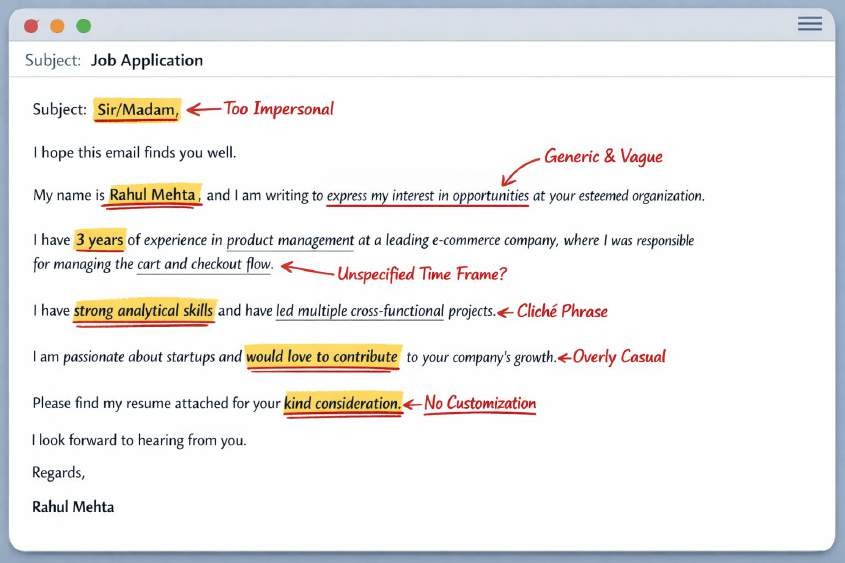 Most cold emails fail because they're too long and/or too focused on the sender. Here's an example of what doesn't work:
Everything about this is wrong. It's generic. It's all about Rahul. It provides zero value to the recipient. It could be sent to any company.
And here's an example of what works:
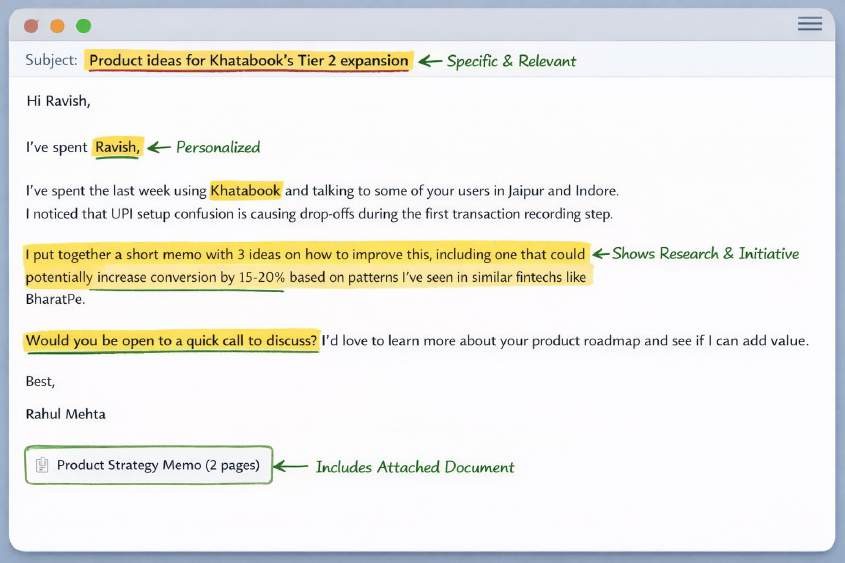
See the difference?
- Short: 4 sentences, under 100 wordsSpecific: Names the product, the problem, and the solution approachValue-first: Leads with what Rahul can offer, not what he wantsClear ask: Requests a call, not a jobProof of work: Attached memo shows he's done the work
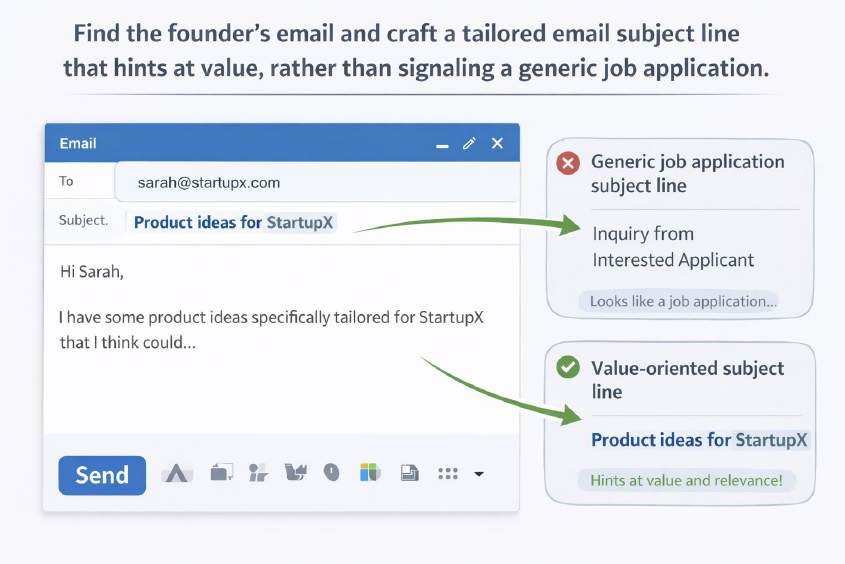
The Subject Line Matters
Don't use: "Job Application" or "Inquiry about PM Role"
Use: "Product ideas for [Company Name]" or "Insights from [specific user segment]" The subject line should hint at value, not signal "generic job application."
Attach Your Memo, Don't Paste It
The memo should be a PDF attachment, not pasted in the email body. Why?
- It shows you put effort into formatting it properlyIt's easier to forward internally ("Hey team, check out what this person sent")It can be saved and referenced later
The email itself should be a teaser that makes them want to open the attachment.
Finding Email Addresses: The Detective Work
Most people give up when they can't find an email address. Don't be like most people.
The Standard Formula
90% of startup emails follow this pattern: firstname@companydomain.com
If the founder's name is Priya Sharma and the company is GetFit, try:
Use tools like Hunter.io or RocketReach, or Apollo.io to verify, but honestly, just trying the standard formula usually works.
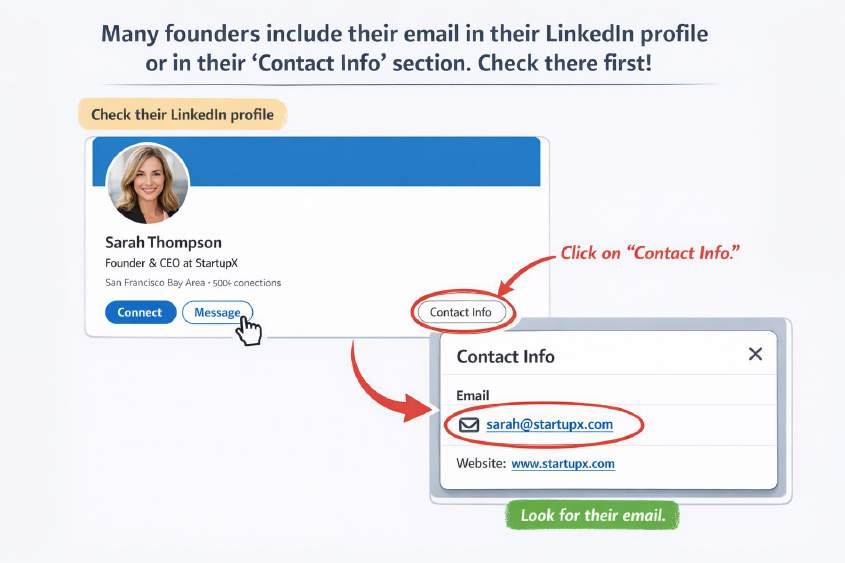 Many founders include their email in their LinkedIn profile or in their "Contact Info" section. Check there first.
Also, look at their LinkedIn posts. Sometimes they'll mention their email when asking people to reach out about something.
Twitter / X
Indian startup founders are active on Twitter. Check their bio; many include their email there.
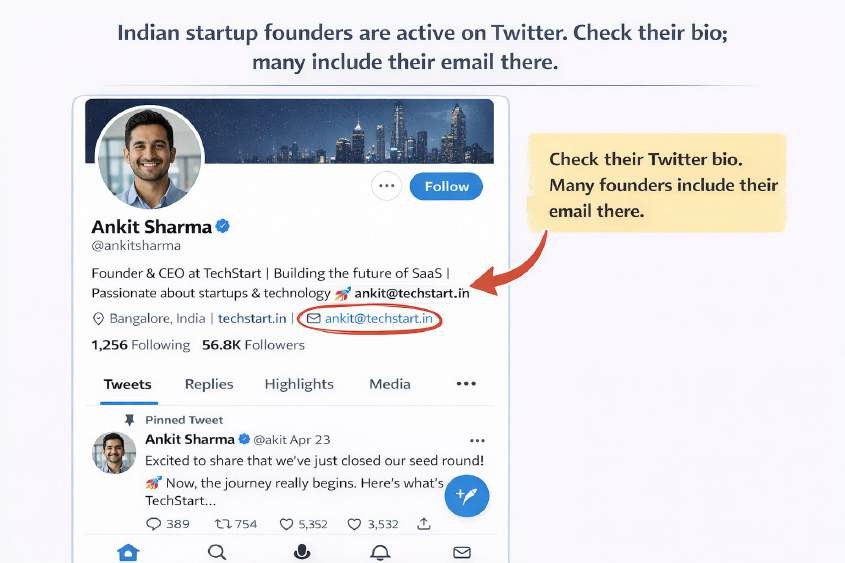
Even if they don't, Twitter is a great place to engage first. Reply thoughtfully to a few of their tweets over a week, then DM them. Once you've established a tiny bit of rapport, asking for their email feels more natural.
Warm Intros
This is the gold standard. If you know someone who knows the founder, ask for an intro. Mutual connections you should check:
- Alumni from your college working at the companyFriends working at portfolio companies of the same VCProfessors or mentors with startup connectionsPeople in your LinkedIn network who might know them
When asking for an intro, make it easy for the connector. Send them:
- A short blurb about yourself (2-3 sentences)Why are you interested in this specific companyYour memo attached, so they can forward it directly Don't make them do work. Make it copy-paste easy.
Reaching Out Through VCs
If the startup is backed by a VC you have any connection to, even a weak one, leverage it.
VCs want their portfolio companies to hire great people. If you can get a VC to intro you to a founder by saying, "This person did interesting work analyzing your product, thought you should meet them," that's incredibly powerful.
For a list of VCs to reach out to or network through, check Part 3.
Targeting the Right Person
For early-stage startups (pre-Series B), email the founder directly. They're usually involved in hiring decisions.
For larger startups (Series B+), you might need to target the Head of Product or a specific Product Lead.
How to find the right person:
- Check the company's LinkedIn page and look at their team
- Look for "Product" titles on LinkedIn
- Check the "About Us" or "Team" page on their website
- Look at who's writing on their blog. Often, product leaders write there
If you're not sure who to reach out to, start with the founder. Worst case, they'll forward you to the right person, and that internal referral is valuable.
We've personally coached five mentees on this approach, and all three successfully engaged with their target companies. Previously, their cold emails, resumes, and generic messages had been overlooked.
The Numbers Game: Why You Need to Contact 30-50 Startups
Here's what nobody tells you: even if you do everything right, most of your emails won't get responses.
This isn't because your email is bad or your memo is weak. It's just math.
The "30-50 Startups" Rule
If you want to get 3-5 real conversations, you need to reach out to 30-50 startups with high- quality, customized outreach.
Typical response rates:
- Cold email with generic resume: 1-3% response rate
- Cold email with value-driven memo: 10-20% response rate
- Warm intro with memo: 40-60% response rate
So if you send 50 high-quality emails with Product Strategy Memos:
- 5-10 will respond
- 3-5 will schedule calls
- 1-2 might lead to interviews
Those are good odds. But you need volume.
Why Responses Vary
Even with a great email and memo, whether you get a response depends on factors outside your control:
- The Value You Demonstrated: Did your memo actually provide insights they hadn't thought of? Or was it generic advice they've heard before?
- Legitimacy Signal: Does your LinkedIn profile look real and professional? Do you have mutual connections? Have you engaged with their content before?
- Email Quality: Was it personalized? Did you spell their name right? Did you mention something specific about their product?
- Timing and Need: Are they actively thinking about hiring? Did you email them right when they got funding? Or are they in the middle of a crisis and not checking email?
- Hiring Status: Do they have the budget to hire? Are they at a stage where they need PMs? Or are they still pre-product-market fit with just 3 people?
- Founder Visibility: Famous founders get 100+ cold emails per week. Less visible founders might only get a handful. Your email has better odds with the latter.
- Founder Memory and Bandwidth: Sometimes founders see your email, think "interesting, I'll respond later," and then forget because 10 other urgent things came up.
You can't control most of these factors. That's why you need volume.
The Power of Follow-Ups
Here's a mistake most people make: they send one email, get no response, and give up. Don't give up.
Many founders are genuinely interested but just forgot to respond. A polite follow-up can work wonders.
How to Follow Up (The Right Way)
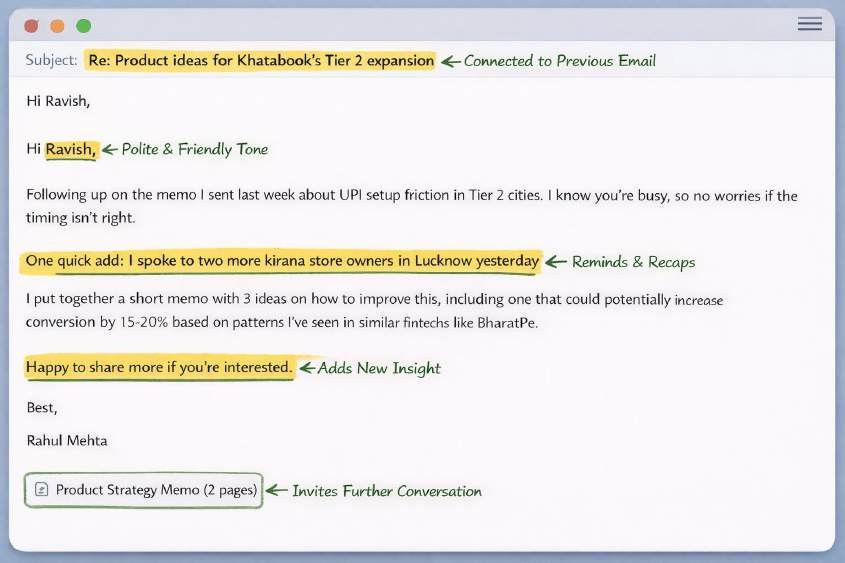 Wait 5-7 days, then send a short follow-up:
Notice:
- You're adding new value, not just bumping the thread
- You're giving them an out ("no worries if timing isn't right")
- You're keeping it short
Follow up once, maybe twice. After that, move on. If they don't respond after two follow-ups, either:
- They're not interested
- They're too busy
- They don't have hiring needs right now
Any of those is fine. Don't take it personally. Move on to the next company on your list.
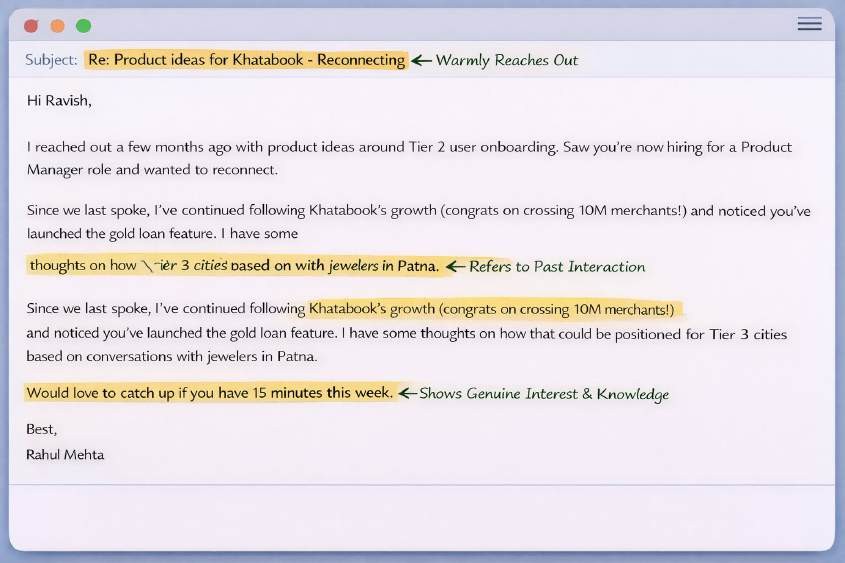 One Exception: If they post a job opening 2 months later, absolutely reach out again, referencing your previous email.
Responding Quickly: The 24-Hour Rule
This is critical, and most people screw it up.
When someone responds to your cold email, especially a founder, reply within 24 hours. Ideally, within a few hours.
Why? Because:
- It shows you're serious and organized
- They're thinking about you right now, strike while the iron is hot
- Founders move fast and appreciate people who do too
Even if they email you on Saturday night, respond on Sunday morning. Startup founders work weekends. If you wait until Monday, they might have moved on mentally.
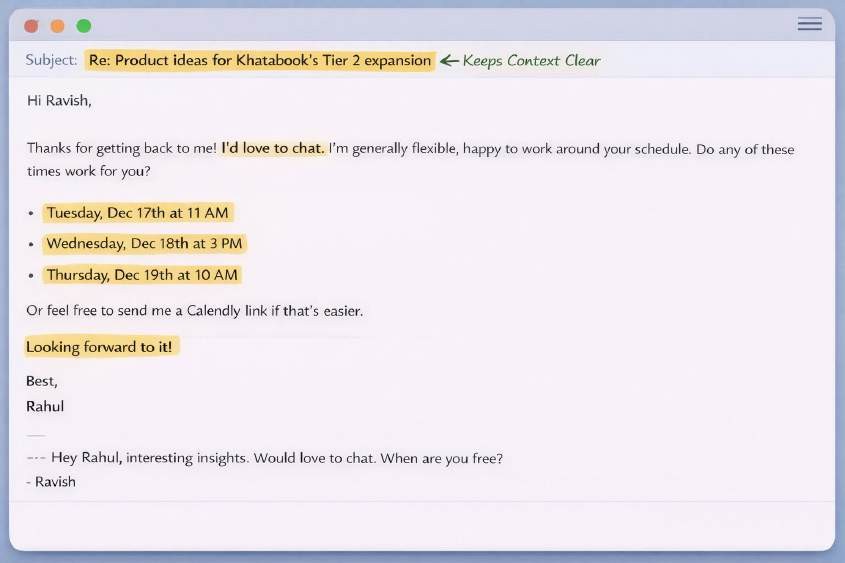 Your response should be short and action-oriented:
Notice:
- You're not asking them to propose times (that's more work for them)You're giving specific options (not "let me know what works")You're offering flexibility (Calendly option) Make it easy for them to say yes.
The Call: Your Moment to Shine (Or Blow It)
You got the call. Congrats! Now don't mess it up.
Most people treat this first call like an interview where they need to prove their credentials. Wrong mindset.
This call is a problem-solving conversation. You're trying to understand their challenges and see if you can help. You're also evaluating if this is a place you want to work.
The Key Question (Ask This Early)
After 2-3 minutes of pleasantries and context-setting, ask:
"What's the most important product challenge you need to solve right now?"
This question is gold because:
- It shifts the focus from you to their problems
- It gives you the roadmap for the rest of the conversation
- It shows you're thinking like a problem-solver, not a job-seeker They might say:"We're struggling with retention; users drop off after 2 weeks.""We need to figure out our pricing model for enterprise customers.""We're trying to expand to Tier 2 cities, but don't understand those users."
Now you know what they care about. The rest of the call should revolve around this challenge.
Angle the Call: Value First, Job Second
Your goal is NOT to ask about the job opening, salary, or interview process. Not yet.
Your goal is to have a genuinely interesting conversation about their product challenges and demonstrate that you can think strategically about solutions.
Structure the conversation like this:
First 15 minutes: Understand the problem deeply
- Ask clarifying questions about their challengeAsk about what they've already triedAsk about constraints (budget, team bandwidth, technical limitations)
Next 15 minutes: Share your thinking
- Reference insights from your memo if relevantAsk if they've considered [specific approach]Share examples from other companies (with humility: "I don't know if this would work for you, but I've seen X company try Y")
Last 10 minutes: Discuss potential fit
- Ask what kind of person they're looking forAsk what success looks like in the first 3-6 monthsExpress a genuine interest in working on these challengesAsk about next steps
Notice the order: problem → solutions → fit. Not: fit → salary → when can I start.
Quick Call Tips That Matter
Take Notes
Have a Google Doc open. Write down:
- The main challenge they mentionedSpecific constraints or contextNames of people they referenceAnything you want to follow up on
After the call, these notes will help you send a great follow-up email.
Prepare Thoughtful Responses, Don't Wing It
When they ask, "So tell me about yourself," don't ramble about your career history in chronological order.
Prepare a 60-second pitch that connects your experience to their challenges:
"I've spent the last 2 years at [Company] working on [relevant area]. The reason I'm interested in [their company] specifically is that [specific challenge they face] is something I have unique experience with from [concrete example]. I'm at a point where I want to work on [type of problem their company solves] at an earlier stage where I can have more impact."
Notice: you're connecting your experience to their needs, not just listing your resume.
Do Your Research Before the Call
You should already know:
- Who their investors areWhat their competitors are doingRecent press or blog posts about the companyWho else is on their team (check LinkedIn)
If they mention "our Series A from Sequoia," don't ask, "Oh, when did you raise that?" You should already know.
Care About the Details
If they mention something specific, a product feature, a competitor, a user segment, and you're not familiar with it, write it down and research it immediately after the call.
Then reference it in your follow-up email: "After our call, I looked into [thing they mentioned] and thought about how that might affect your approach to [their challenge]..."
This shows you're detail-oriented and you actually care.
Don't Be Afraid to Say "I Don't Know"
If they ask you something you don't know, don't bullshit.
Say: "I don't know offhand, but that's a great question. Can I think about it and get back to you tomorrow?"
Then, actually think about it and email them thoughtful thoughts the next day. Founders respect honesty and follow-through way more than fake expertise.
End With a Clear Next Step
Before the call ends, clarify what happens next.
"This has been a great conversation. What would the next steps look like from here?" They might say:
- "Let me introduce you to our Head of Product.""We'd like to do a case study interview.""Let's stay in touch, we're not hiring right now but will be in 2 months."
Get clarity. Don't end with "okay great, talk soon" and then wonder what's supposed to happen.
The Follow-Up Email (Don't Skip This)
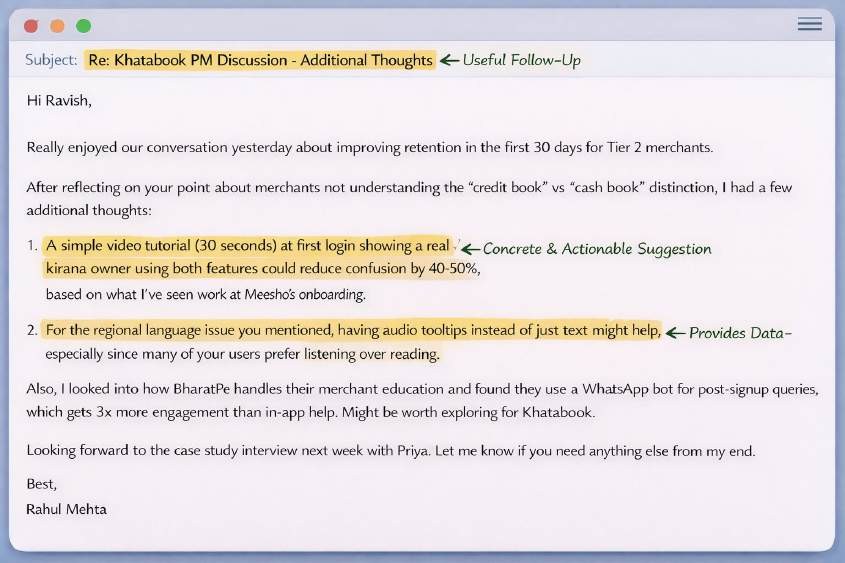 Within 24 hours of the call, send a follow-up email. This is non-negotiable. Structure:
This email serves multiple purposes:
- It shows you listened and are still thinking about their problems
- It demonstrates follow-through
- It keeps you top-of-mind
- It's another touch-point that reinforces your interest
Many people skip this or send generic "thanks for your time" emails. Don't be those people.
Making It Practical: Your Outreach Action Plan
Here's how to execute this systematically:
Week 1-2: Prepare
- Build your target list of 30-50 startups (from Blog 3)Write your cold email template (customize for each company, but have a structure)Prepare your 60-second pitch
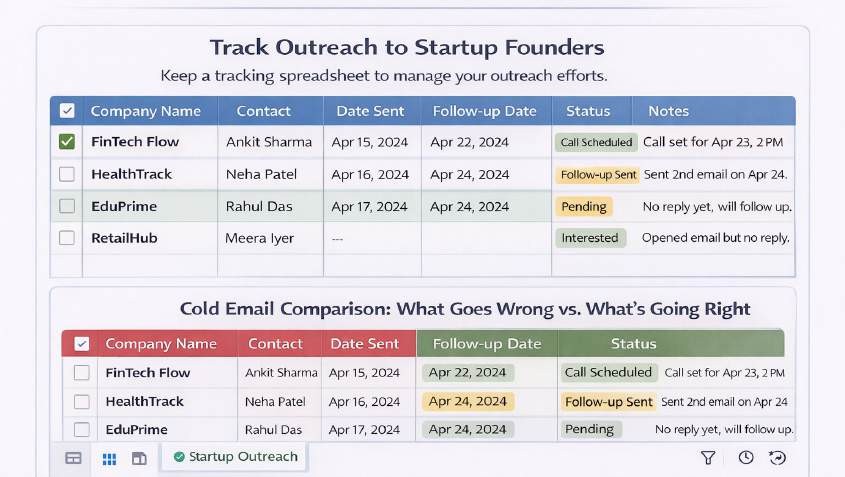 Set up a tracking spreadsheet: [Company Name | Contact | Date Sent | Follow-up Date | Status | Notes]
Week 3-6: Execute
- Send 5-10 emails per week (with customized memos)Track all responses and follow-ups in your spreadsheetFollow up on emails after 5-7 daysWhen you get calls, execute the framework aboveSend follow-up emails within 24 hours of every call
Ongoing
- Keep your tracking spreadsheet updatedWhen companies don't respond, add them back to your list for 2-3 months laterKeep engaging with founders on LinkedIn/TwitterKeep refining your approach based on what's working
Not sure how to go about this? Let us help you with this approach and guide you step by step on how to do it correctly, so it lands well.
The Bottom Line
Outreach is a numbers game, but it's not a random spray-and-pray approach. It's a targeted, high-effort strategy where you:
- Identify the right companies
- Craft customized, value-driven emails with strategic memos
- Follow up persistently but respectfully
- Convert responses into meaningful conversations
- Demonstrate problem-solving ability on calls
- Follow through consistently
Most people fail at outreach because they:
- Send generic emailsGive up after one attemptDon't follow up quicklyTurn calls into credential presentations instead of problem-solving conversationsSkip the follow-up email
Do the opposite of what most people do, and you'll be in the top 2-3% of candidates.
Yes, you might send 50 emails and only get 3 meaningful conversations. But those 3 conversations could change the trajectory of your career.
And when you finally get hired, it won't be because you were the most qualified person who applied to a job posting.
It'll be because you showed up, demonstrated value, and proved you could solve real problems before you even had the job.
That's how you get hired at an Indian startup.
Next Up: In Part 5 (the final part), we'll cover how to nail the actual PM interviews, case studies, behavioral questions, and what interviewers are really looking for when they evaluate candidates.